Source Customized Laser Protective Glass Lens for Optical, Medical, Lighting
Compare 30 listings for customized laser protective glass lens from verified suppliers. Buyers can evaluate optical glass types, transmittance rates, and custom manufacturing options for photography, medical, and lighting applications.
Key considerations
Products List


Comprehensive Sourcing Guide
Strategic Sourcing Guide for Customized Laser Protective Glass Lenses
Navigating the global market for customized laser protective glass lenses requires a rigorous approach to technical verification and supplier qualification. The core keyword "customized laser protective glass lens" encompasses a diverse range of optical components designed to withstand high-energy laser environments while maintaining precise transmission characteristics. Buyers must distinguish between generic optical glass and specialized substrates engineered for specific laser wavelengths and power densities. The procurement process begins with a clear definition of the application environment, whether it involves medical imaging, industrial machining, or scientific research, as these factors dictate the necessary material properties and safety certifications.
Technical Specifications and Material Selection
The foundation of a successful procurement strategy lies in understanding the specific technical parameters of the lens. The optical substrate is the primary determinant of performance. In the observed market, materials range from standard optical glass to specialized substrates such as Silicon (Si). The choice of material directly influences the lens's ability to transmit specific wavelengths while blocking harmful radiation. For instance, certain lenses are specified with a transmission rate of more than 99.5%, while others in the same category may offer a transmittance range of 90% to 95% or greater than 95%. These variations are not arbitrary but are tied to the specific wavelength ranges the lens is designed to handle.
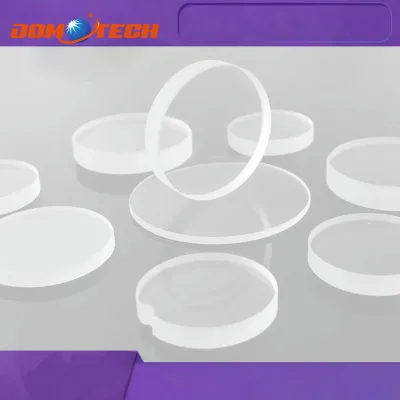
Wavelength compatibility is a critical specification. Sourcing data indicates that lenses are available for specific spectral bands, such as 488-694 nm or 700-950 nm. When sourcing for laser protection, the buyer must verify that the lens's transmission window aligns with the laser's operating wavelength to ensure safety without compromising the necessary optical function. Furthermore, the physical geometry of the lens plays a vital role. The market offers both cylindrical shaped lenses and single-lens configurations, including convex and concave types. The dimension tolerance is a key metric for precision applications, with observed standards ranging from +/-0.01 mm to custom manufacturing capabilities.
Surface quality is another non-negotiable specification. High-performance laser lenses often require surface finishes defined by scratch-dig standards, such as 20-10 or 40-20. These numbers represent the maximum allowable scratch and dig defects on the optical surface. Additionally, surface flatness is critical for maintaining beam integrity. Specifications such as Lambda/10 at 632.8 nm with power removed indicate the level of optical precision required for high-end applications. Buyers should request detailed surface quality reports to ensure the lens meets the strict requirements of their laser system.
Compliance and Certification Verification
In the realm of laser safety and optical components, certification serves as a proxy for quality assurance and regulatory compliance. When evaluating suppliers, buyers must look for recognized certifications that validate the product's adherence to international standards. The observed market includes products certified under ISORoHS, CE, and ISOCustomized standards. These certifications indicate that the manufacturing process and the final product have undergone specific checks for hazardous substances and safety protocols.
It is essential to distinguish between general product certifications and specific laser safety standards. While some suppliers list RoHS compliance, which restricts the use of specific hazardous materials, buyers must also verify if the product meets specific laser safety standards relevant to their region, such as EN 207 for eye protection, though this specific standard should be treated as a verification target rather than a guaranteed attribute of every listed item. The presence of "Customized" certification suggests that the supplier has the capability to tailor products to specific regulatory requirements, which is a significant advantage for specialized industrial applications.
Buyers should request copies of the certification documents to verify their validity and scope. The certification should cover the specific batch or model number being procured. Additionally, the origin of the product, often listed as Changchun, Jilin, or generally China, can provide context regarding the manufacturing ecosystem, but it does not replace the need for independent verification of the product's compliance status.
Cost Drivers and Pricing Dynamics
The pricing structure for customized laser protective glass lenses is influenced by a complex interplay of factors, including material scarcity, manufacturing complexity, and customization levels. The observed price range in the market is vast, spanning from $0.50 to $6,000. This wide disparity reflects the difference between standard off-the-shelf components and highly engineered, custom-manufactured optics.
Several key drivers contribute to the final cost. First, the substrate material is a primary cost factor. Specialized materials like Silicon (Si) or high-purity optical glass command higher prices than standard glass. Second, the level of customization significantly impacts the price. Lenses with custom dimensions, specific coatings like dielectric coatings, or unique surface quality requirements (e.g., 20-10 scratch-dig) incur additional machining and testing costs. Third, the minimum order quantity (MOQ) plays a role; observed MOQs range from 1 to 100 units. Smaller orders often carry a higher per-unit cost due to setup and tooling expenses, whereas bulk orders may benefit from economies of scale.
Other cost drivers include the thickness of the lens, which can range from 0.30 mm to 500 mm, and the edge thickness, which is often a custom manufacturing parameter. The coating type, such as dielectric coatings designed for specific wavelength ranges, adds to the manufacturing complexity and cost. Buyers should be prepared for a tiered pricing model where the cost increases with the precision and specificity of the requirements.
Typical Applications and Functional Requirements
Customized laser protective glass lenses serve a multitude of industries, each with unique functional requirements. The observed usage categories include optical systems, photography, medical devices, and lighting. In medical applications, lenses may be designed for specific functions such as correcting presbyopia, treating astigmatism, or providing UV protection. These lenses often have an age group of adults and are suitable for all face types, indicating their use in wearable optical devices or medical instruments.
In industrial settings, the primary function is often laser protection and beam shaping. The lenses are used to focus or collimate laser beams for cutting, welding, or engraving processes. The specific wavelength range of the laser determines the lens material and coating. For example, a lens designed for a 1064 nm laser will have different transmission properties than one designed for a 532 nm laser. The "Function" attribute in the market data lists capabilities for 3D applications, UV protection, and correction for various vision issues, highlighting the versatility of these optical components.
The shape of the lens, whether cylindrical or spherical, and its type, such as convex or concave, are selected based on the optical path design. Cylindrical lenses are often used to shape laser beams into lines, while spherical lenses focus or diverge beams. The choice of shape and type must align with the specific optical design of the end product.
Supplier Evaluation and Manufacturing Capabilities
Evaluating a supplier for customized laser lenses requires a deep dive into their manufacturing capabilities and quality control processes. The market data indicates that suppliers offer various levels of customization, from standard models to fully custom manufacturing. Key capabilities to verify include the ability to perform polishing and coating processes in-house. The presence of specific surface quality standards, such as 20-10 or 40-20 scratch-dig, suggests a mature manufacturing process capable of high-precision optics.
Suppliers should demonstrate the ability to handle a wide range of dimensions, from 0.3 mm to 300 mm, and offer custom manufacturing for edge thickness and effective focal length (Efl). The packaging methods, ranging from clean boxes to cartons or wood cases, also reflect the supplier's attention to protecting the delicate optical surfaces during transit. A supplier that offers "as requested" or "as requested" packing demonstrates flexibility and a customer-centric approach.
When evaluating suppliers, buyers should request a detailed process flow that outlines the steps from raw material selection to final inspection. The ability to produce lenses with specific surface flatness, such as Lambda/10 at 632.8 nm, is a strong indicator of high-end manufacturing capabilities. Additionally, the supplier's experience with specific materials, such as Silicon (Si), should be verified to ensure they have the necessary expertise for specialized applications.
Quality Control and Long-Term Procurement Considerations
Quality control is paramount in the procurement of laser protective glass lenses. The observed specifications include rigorous standards for surface quality, dimension tolerance, and transmittance. Buyers should implement a robust quality control plan that includes incoming inspection of the lenses against the agreed-upon specifications. This includes verifying the surface quality (scratch-dig), checking the dimension tolerance (e.g., +/-0.01 mm), and testing the transmittance at the relevant wavelengths.
Long-term procurement considerations involve establishing a reliable supply chain that can consistently meet quality standards. The variability in observed standards, such as different thickness ranges (0.3mm-300mm vs. 1-300mm), suggests that buyers must clearly define their requirements to avoid ambiguity. Consistency in manufacturing processes is crucial, especially for high-volume production runs. Buyers should also consider the lead times and the supplier's ability to scale production as their needs grow.
The packaging and storage conditions are also critical for maintaining the quality of the lenses over time. Suppliers offering clean box or specialized packaging help ensure that the lenses remain free from contamination and damage. Finally, buyers should maintain open communication with suppliers regarding any changes in specifications or requirements to ensure that the long-term supply remains aligned with the evolving needs of the application.
Comparative Analysis of Key Product Attributes
To facilitate a clearer understanding of the market offerings, the following table summarizes the key attributes observed in the supply base. This comparison highlights the diversity in specifications and helps buyers identify the most relevant options for their specific needs.
| Attribute Category | Observed Specification A | Observed Specification B | Observed Specification C |
|---|---|---|---|
| Material | Optical Glass | Silicon (Si) | Optical Glass |
| Shape | Cylindrical Shaped Lens | Single-lens | Cylindrical Shaped Lens |
| Type | Convex Lens | Concave Lens | Convex Lens |
| Transmittance | >95% | 90%-95% | More Than 99.5% |
| Surface Quality | 20-10 Scratch-Dig | 40-20 Scratch-Dig | 20-10/40-20 Scratch-Dig |
| Coating Type | Dielectric Coating | Dielectric Coating | Custom Manufacturing |
| Wavelength Range | 488-694 Nm / 700-950nm | Custom Manufacturing | Custom Manufacturing |
| Certification | ISORoHS | CE, ISORoHS | ISOCustomized |
| Origin | Changchun, China | Jilin, China | China |
| Dimension Tolerance | +/-0.01 | Custom Manufacturing | Custom Manufacturing |
This table illustrates that while there is a commonality in the types of certifications and surface quality standards, the specific material and transmittance values vary significantly. Buyers must use this data as a reference point for their specific requirements rather than assuming all products share these exact attributes. The ability to customize dimensions, coatings, and surface quality is a recurring theme, underscoring the importance of clear communication with suppliers to ensure the final product meets the precise needs of the application.
FAQs
What certifications do customized laser protective glass lenses have?
Products often carry ISORoHS, CE, and ISOCustomized certifications. These indicate compliance with hazardous substance restrictions and safety protocols. Buyers should verify specific batch documents to ensure the lens meets regional laser safety standards.
Which materials are used for these optical lenses?
Substrates include optical glass and specialized silicon. The material choice depends on the required wavelength transmission and laser protection needs. Silicon substrates are noted for specific high-transmission applications in the market.
Can buyers request custom dimensions for these lenses?
Yes, customization is available for dimensions, edge thickness, and focal length. Specifications range from 0.3mm to 300mm or can be fully custom manufactured. This allows for precise integration into specific optical systems.
What is the typical surface quality standard for these lenses?
Surface quality is often rated at 20-10 or 40-20 Scratch-Dig. High-precision applications may require Lambda/10 flatness at 632.8nm. Buyers should request detailed reports to confirm the finish meets their optical system requirements.
How is the transmittance of these lenses defined?
Transmittance values vary between 90% to 95% or exceed 99.5% depending on the model. Specific wavelength ranges like 488-694nm or 700-950nm dictate the transmission performance. This ensures safety while maintaining necessary optical function.
What are the standard packaging options for these lenses?
Packaging includes clean boxes, cartons, wood cases, or as requested. This flexibility protects delicate optical surfaces during transit. Suppliers often tailor packing methods to the specific fragility and size of the lens.
Where are these lenses typically manufactured?
Products originate from locations such as Changchun, Jilin, and generally China. These regions host established manufacturing ecosystems for optical components. Buyers should verify the specific origin for each batch to ensure supply chain consistency.